


Firewood Rushden
Firewood Rushden
Free delivery to Rushden
and surrounding areas.
- Kiln-dried logs
- Free delivery
- Free stacking service
- Local team delivering to Rushden


Firewood Rushden
Free delivery to Rushden and surrounding areas.
- Kiln-dried logs
- Free delivery
- Free stacking service
- Local team delivering to Rushden
At Nene Valley Firewood, we supply top-quality kiln-dried logs with free delivery and stacking across Rushden and surrounding villages. Whether you’re in town or tucked away in the Northamptonshire countryside, our local team delivers straight to your door. Fast, friendly, and five-star rated. Keep your home warm with sustainably sourced wood, dried and ready to burn.
Best Selling Logs And Firewood In Rushden

Kiln Dried Hardwood Logs – Bulk Bag
£145 Incl. VAT
Top-quality firewood logs with a long burn and great heat efficiency.

Kiln Dried Hardwood Logs 1, 2 or 3 loose m³
£210/M3 Incl. VAT (WITH FREE STACKING)
Buy Kiln-dried hardwood logs by the cubic metre for economy and value. Logs will be stacked for free in an outside location.
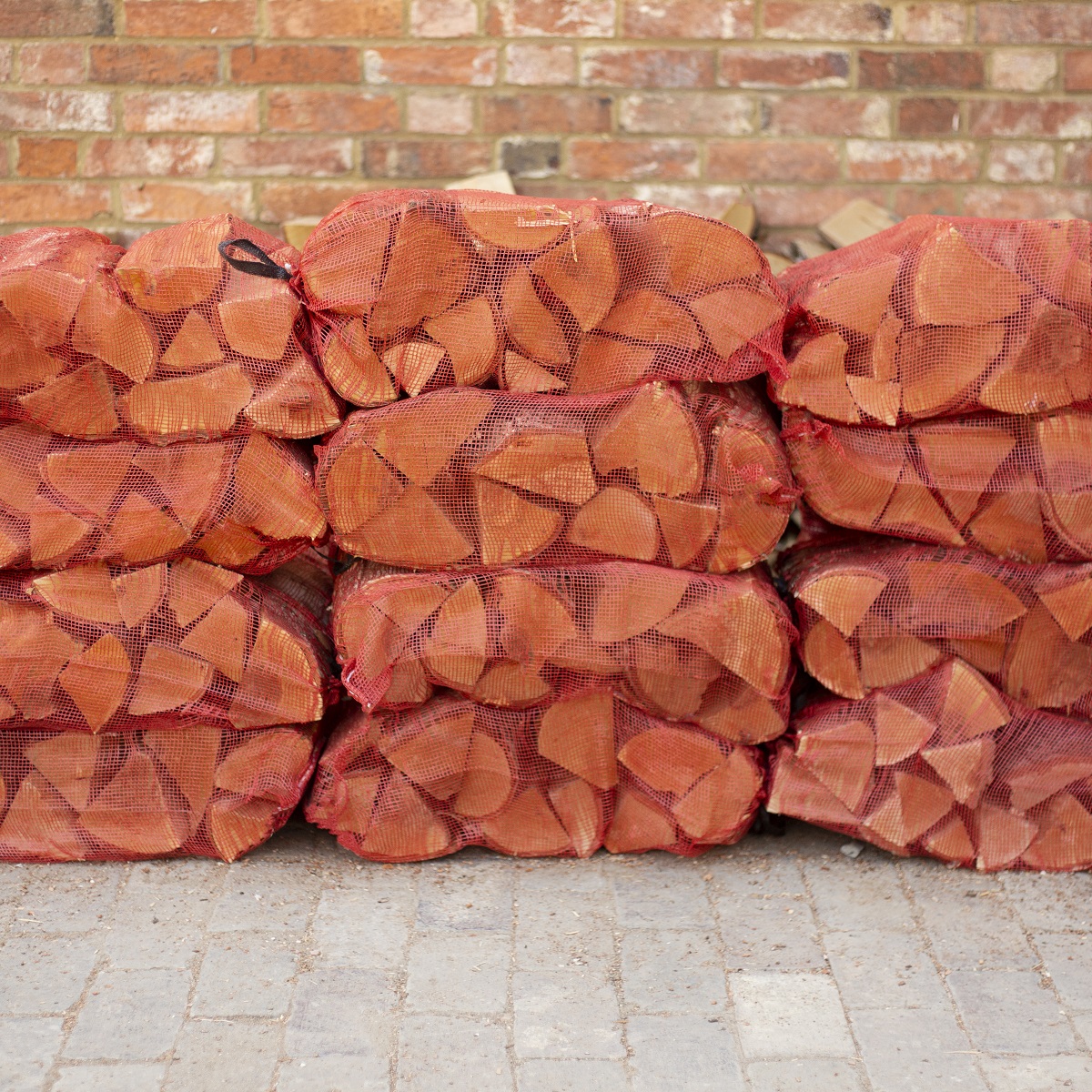
Kiln Dried Hardwood Logs 12, 30 or 60 nets
£110 – £450 Incl. VAT
Choose from 12, 30 or 60 nets for economy firewood. Always below 18% moisture content.
Free Firewood Delivery Beyond Rushden
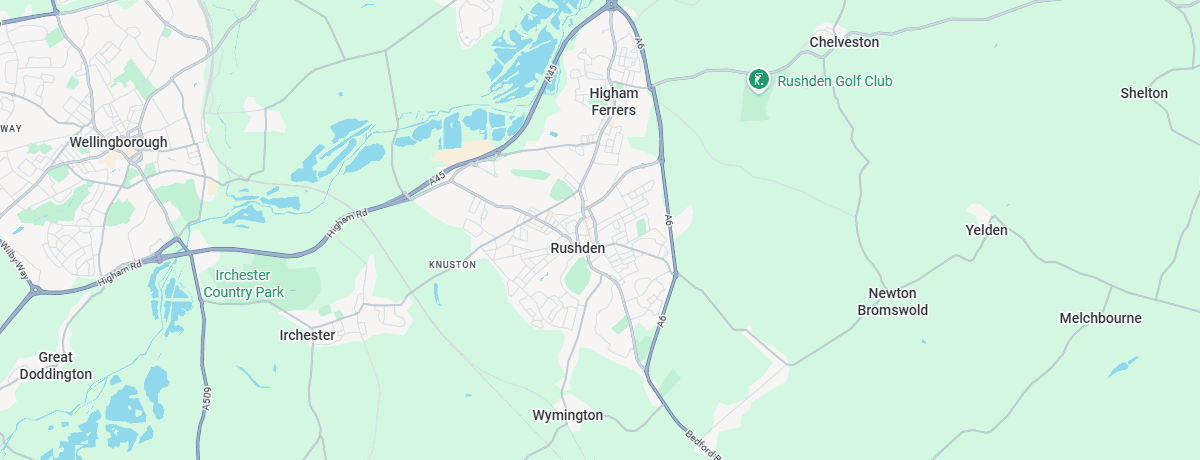
We also offer free delivery to all of the local areas around Rushden including Wellingborough, Higham Ferres, Raunds, Wymington, Irchester, Sharnbrook or Newton Bromswold. Whether you live near Rushden Lakes, along the Wellingborough Road, or in a countryside village, we’ll bring your logs right to your door.
Why choose us for your logs in Rushden?

You might’ve seen our delivery vans near Spencer Park, Rushden Museum, or on the A5028. Whether you’re in a Victorian terrace near the town centre or a rural farmhouse on the outskirts, we’re here to keep your firewood topped up all year round.
Send us a picture of one of our vans in Rushden and we’ll add some free firelighters to your next order!
Fun Facts…. Rushden’s Historic Connection to Wood and Fire

Rushden’s historic connection to wood and fire stems from its origins as a “rushy valley” (wooded valley) and its subsequent history of major fires, particularly the devastating 1901 factory fire that destroyed much of the town’s boot manufacturing industry. While its name signifies an origin in a valley of rushes and trees, the town’s rapid growth led to a series of fires that impacted its development, most notably the large-scale destruction of the boot factories, shops, and schools in 1901.
Wood
Origin of the name: The town’s name, Rushden, comes from the Anglo-Saxon words “rise” (rush) and “den” (small wooded valley). This indicates its historical location in a valley rich with trees and rushes.
Landmarks: Historical accounts mention significant trees, such as a large oak on Spital Hill (now Rushden Hill), which was later destroyed by lightning.
Fire
1901 Disastrous Fire: This event was one of the most significant fires in Rushden’s history, destroying the factory of John Cave, a major shoe manufacturer, and numerous other buildings including shops, the Board Schools, and private residences.
Causes of destruction: The fire was fuelled by the town’s industry, which was heavily based on boot manufacturing. The rapid growth and development of the town meant many buildings were close together, allowing the fire to spread quickly.
Aftermath: The fire caused immense damage but also prompted a strong community response. Inhabitants helped salvage furniture from their homes, and the fire station, which had only recently been updated, played a crucial role in combating the blaze.
Other fires: The town experienced other significant fires, such as the National Provincial Bank fire in July 1925, which further impacted the community and highlighted the risks associated with fire in a rapidly developing industrial town.