Logs and Firewood Abingdon
Firewood Abingdon
Free delivery to Abingdon
and surrounding areas.
- Kiln-dried logs
- Free delivery
- Free stacking service
- Local team delivering to Abingdon


Firewood Abingdon
Free delivery to Abingdon and surrounding areas.
- Kiln-dried logs
- Free delivery
- Free stacking service
- Local team delivering to Abingdon
At Nene Valley Firewood, we supply top-quality kiln-dried logs with free delivery and stacking across Abingdon and surrounding villages. Whether you’re in town or tucked away in the Oxfordshire countryside, our local team delivers straight to your door. Fast, friendly, and five-star rated. Keep your home warm with sustainably sourced wood, dried and ready to burn.
Best Selling Logs And Firewood In Abingdon

Kiln Dried Hardwood Logs – Bulk Bag
£145 Incl. VAT
Top-quality firewood logs with a long burn and great heat efficiency.

Kiln Dried Hardwood Logs 1, 2 or 3 loose m³
£210/M3 Incl. VAT (WITH FREE STACKING)
Buy Kiln-dried hardwood logs by the cubic metre for economy and value. Logs will be stacked for free in an outside location.
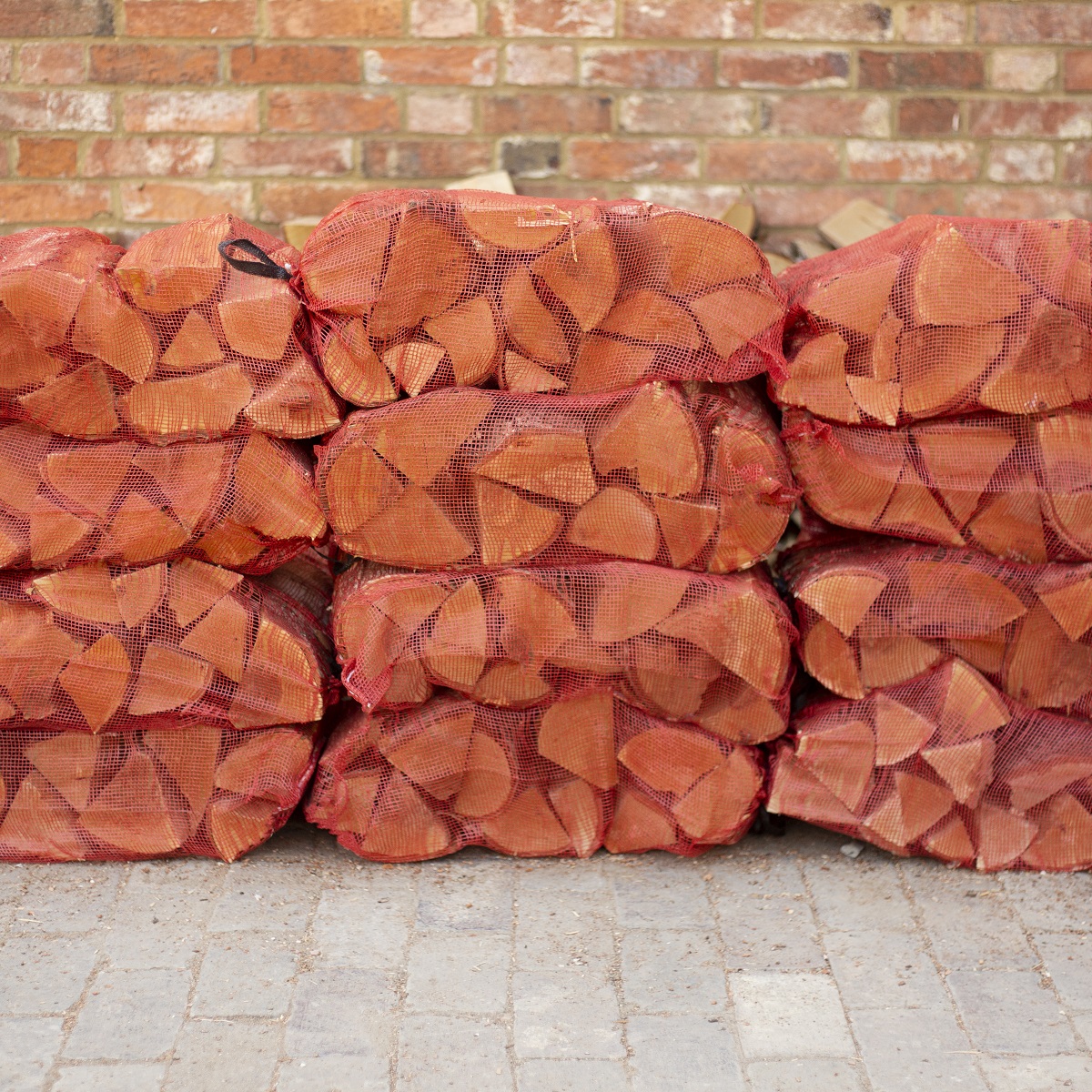
Kiln Dried Hardwood Logs 12, 30 or 60 nets
£110 – £450 Incl. VAT
Choose from 12, 30 or 60 nets for economy firewood. Always below 18% moisture content.
Free Firewood Delivery Beyond Abingdon
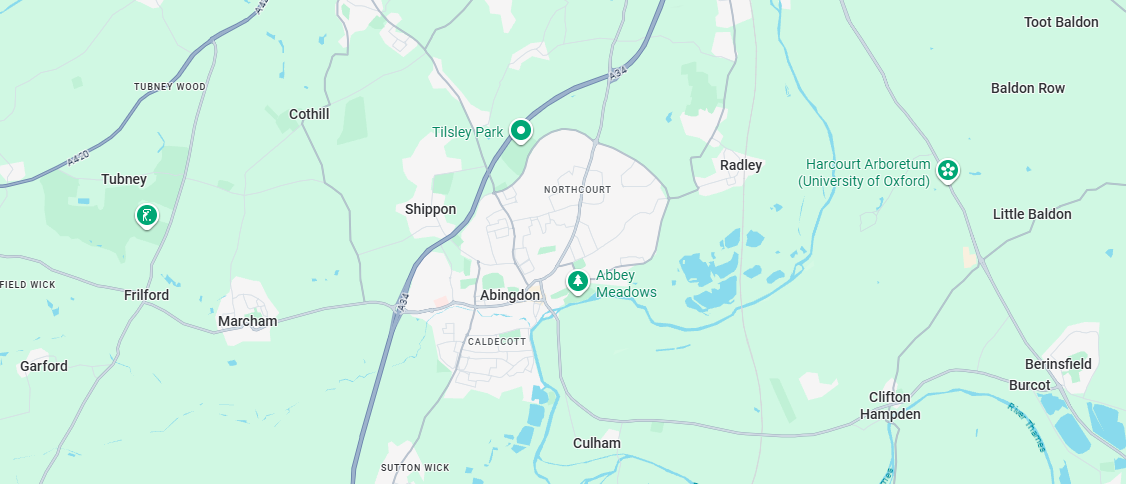
We also offer free delivery to all of the local areas around Abingdon including Shippon, Radley, Sunningwell, Cothill, Gozzard’s Ford, Drayton, Clifton Hampden and Bayworth. Whether you live near Radley Lakes, along the Oxford Road, or in a countryside village, we’ll bring your logs right to your door.
Why choose us for your logs in Abingdon?

You might’ve seen our delivery vans near Abbey Gardens & Abbey Meadows, Nag’s Head Island or on the A34. Whether you’re in a Victorian terrace near the town centre or a rural farmhouse on the outskirts, we’re here to keep your firewood topped up all year round.
Send us a picture of one of our vans in Abingdon and we’ll add some free firelighters to your next order!
Fun Facts…. Abingdon’s Historic Connection to Wood and Fire
Fire risk in timber buildings and thatch
◦ Abingdon, like many medieval and early modern towns, had many timber-framed houses with thatched roofs, straw, furze, all of which are highly flammable.
◦ Because of this, one of the earliest laws (c.1599) included ordinances specifically aimed at preventing fire: inspecting houses, ensuring safe storage of straw/fuel in oasts and brewhouses, etc.
Fire-fighting equipment & communal responsibility
◦ Local authorities mandated that certain burgesses, town officials, keep leather buckets and long ladders, often of fir wood, ready in their homes in case of fire.
◦ Night watches between certain hours were enforced to spot and prevent fires.
Fuel & storage of combustible materials
◦ Straw, furze (a kind of gorse), fern etc, were stored in thatched houses and oasts and these storage practices led to commands to store them safely to reduce fire hazard.
◦ There were ricks (stacks) of hay and straw (fuel sources) which sometimes caught fire.
Fire legislation & building leases after the Great Fire of London
◦ Influenced by the Great Fire of London (1666), property leases in Abingdon often included covenants forbidding thatching, requiring stone chimneys and non-wooden flues to limit fire spread.
Firefighting infrastructure and services
◦ Town council ordered purchase of fire engines; by 1733 Abingdon had its first fire engine.
◦ Volunteer Fire Brigade formation in 1871; before that, informal community methods (bucket chains) were used.
◦ Fires are recorded destroying industrial premises those working with flax, hemp or commercial stock.
Woodland ownership and timber supply
◦ Bagley Wood is an ancient woodland historically owned by Abingdon Abbey (until 1538), after which much of it passed to St John’s College, Oxford. So woodlands were in the economic and landholdings structure of Abingdon.
◦ This suggests wood likely played an important role as a local resource, fuel and building materials.
Coal trade & firewood supply
◦ As technologies changed and coal became more common, coal merchants and firewood suppliers were significant in Abingdon’s history. For example, there were coal merchants who also supplied wood and solid fuel.
◦ Even into 20th century, coal and wood fuel businesses were part of the town’s economy.