

Logs & Firewood Hinckley
Firewood Hinckley
Free delivery to Hinckley
and surrounding areas.
- Kiln-dried logs
- Free delivery
- Free stacking service
- Local team delivering to Hinckley


Firewood Hinckley
Free delivery to Hinckley and surrounding areas.
- Kiln-dried logs
- Free delivery
- Free stacking service
- Local team delivering to Hinckley
At Nene Valley Firewood, we supply top-quality kiln-dried logs with free delivery and stacking across Hinckley and surrounding villages. Whether you’re in town or tucked away in the Leicestershire countryside, our local team delivers straight to your door. Fast, friendly, and five-star rated. Keep your home warm with sustainably sourced wood, dried and ready to burn.
Best Selling Logs And Firewood In Hinckley

Kiln Dried Hardwood Logs – Bulk Bag
£145 Incl. VAT
Top-quality firewood logs with a long burn and great heat efficiency.

Kiln Dried Hardwood Logs 1, 2 or 3 loose m³
£210/M3 Incl. VAT (WITH FREE STACKING)
Buy Kiln-dried hardwood logs by the cubic metre for economy and value. Logs will be stacked for free in an outside location.
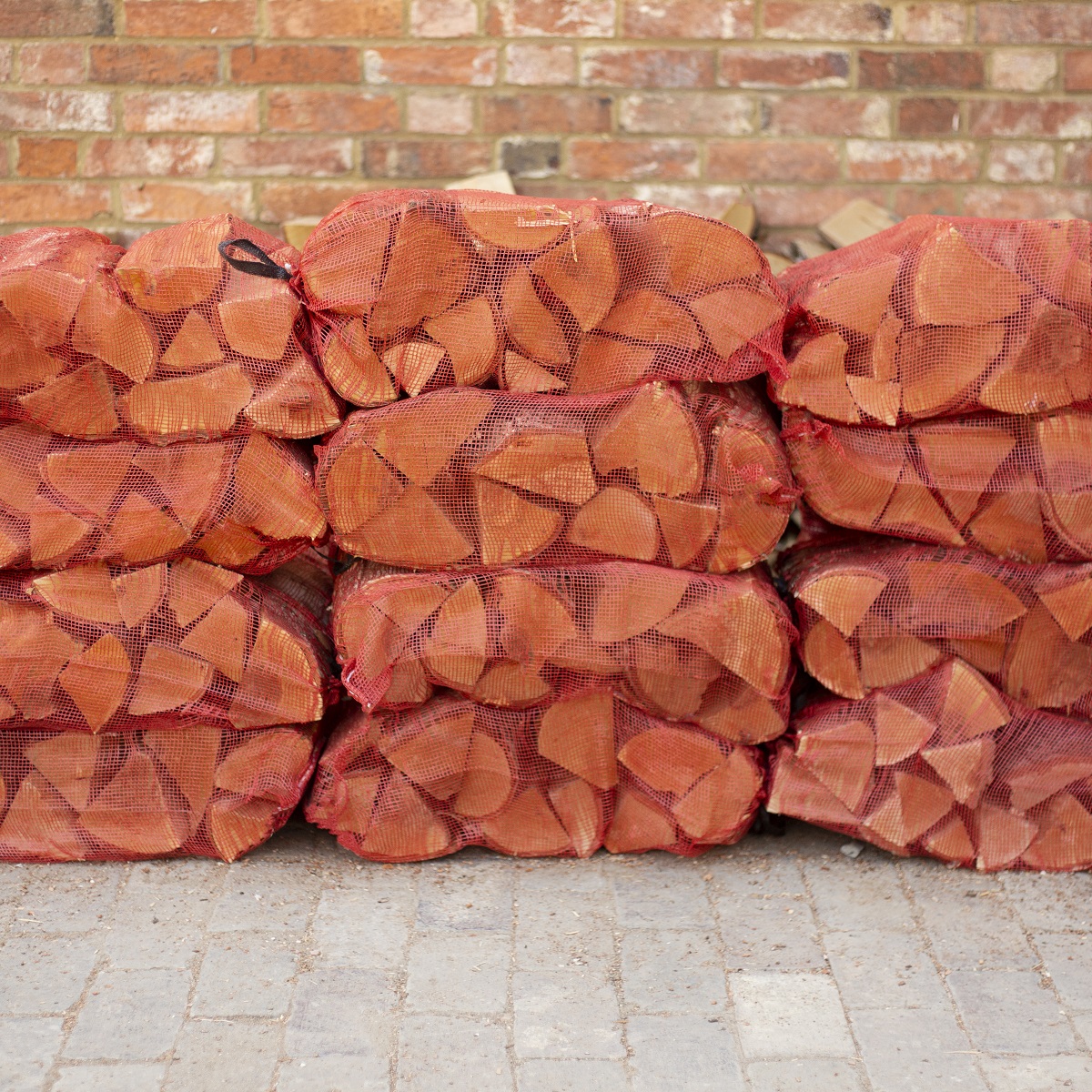
Kiln Dried Hardwood Logs 12, 30 or 60 nets
£110 – £450 Incl. VAT
Choose from 12, 30 or 60 nets for economy firewood. Always below 18% moisture content.



 Trustindex verifies that the original source of the review is Google.
  Trustindex verifies that the original source of the review is Google.
  Trustindex verifies that the original source of the review is Google.
  Trustindex verifies that the original source of the review is Google.
  Trustindex verifies that the original source of the review is Google.
  Trustindex verifies that the original source of the review is Google.
  Trustindex verifies that the original source of the review is Google.
  Trustindex verifies that the original source of the review is Google.
  Trustindex verifies that the original source of the review is Google.
  Trustindex verifies that the original source of the review is Google.
 Free Firewood Delivery Beyond Hinckley
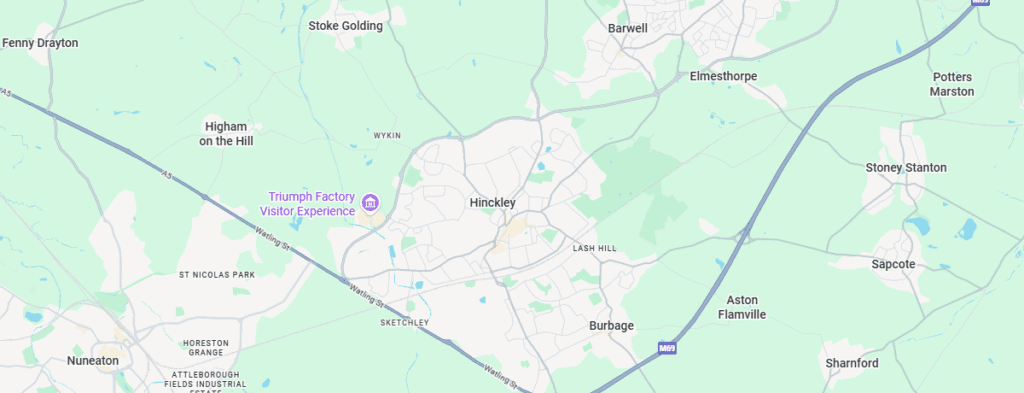
We also offer free delivery to all of the local areas around Hinckley including Burbage, Aston Flamville, Higham on the Hill, Stoke Golding, Barwell, Elmesthorpe and Stapleton. Whether you live near Concordia Theatre, along Ashby Road, or in a countryside village, we’ll bring your logs right to your door.
Why choose us for your logs in Hinckley?

You might’ve seen our delivery vans near Grange Farm, Bond Street Distillery, or on the A47. Whether you’re in a Victorian terrace near the town centre or a rural farmhouse on the outskirts, we’re here to keep your firewood topped up all year round.
Send us a picture of one of our vans in Hinckley and we’ll add some free firelighters to your next order!
Fun Facts…. Hinckley’s Historic Connection to Wood and Fire
Hinckley's historic connection to wood and fire is primarily defined by the devastating Great Hinckley Fire of 1894, which was fueled by the town's logging industry and the extensive, dry wooden debris on the ground. As a major logging and railroad center made of wood, the town was particularly vulnerable, and a firestorm of immense heat destroyed it in a matter of hours, leading to a high death toll.
The Great Hinckley Fire of 1894.
Logging industry: Hinckley was a center for the timber industry. The practice of stripping branches from logs and leaving them on the ground to be burned later created a massive amount of highly flammable material.
Dry conditions: A severe drought and high temperatures in the summer of 1894 left the area extremely dry and susceptible to fire.
Spark to flame: On September 1, 1894, sparks from locomotives on two rail lines south of town ignited the dry wood debris, and the fire spread rapidly northward.
Firestorm: The fires merged into a monstrous firestorm, propelled by hurricane-force winds and creating temperatures of over \(2,000^\) F, hot enough to melt steel.
Destruction: The inferno, a combination of wood debris, drought, and wind, consumed the town and nearby forests, killing at least 418 people.
Survivor stories: Many survivors escaped by seeking refuge on trains or in water, such as a gravel pit or a lake, that the firestorm could not reach.
Legacy: Hinckley Fire Museum: The town now has a museum dedicated to the event, which showcases artifacts and stories from the fire and the subsequent rebuilding efforts.
Town name origin: The name "Hinckley" itself originates from Anglo-Saxon "Hinca" and "ley," meaning "Hinca's wood clearing," reflecting an early connection to woodlands that the firestorm tragically highlighted.